
What is sea freight?
Sea freight is a cost-effective way to move large volumes over long distances. It’s optimal when cost per kilo and schedule stability matter.
At Goods Bulk Supply we access major trade ports and deliver your cargo globally. We offer multimodal logistics solutions that optimize cargo flows and reduce logistics costs.
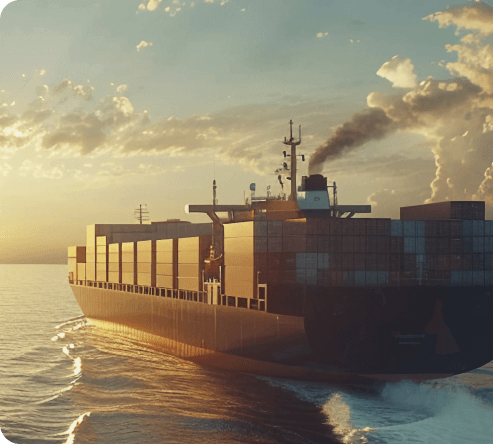
Why sea with us?

High capacity
Move large volumes efficiently.

Economy
Best cost per kilogram for bulk shipments.

Reliability
Stable schedules and proven partners.
Global coverage
Access to major ports worldwide for delivery anywhere.
Consolidation option
Group different product categories in one container to reduce cost.
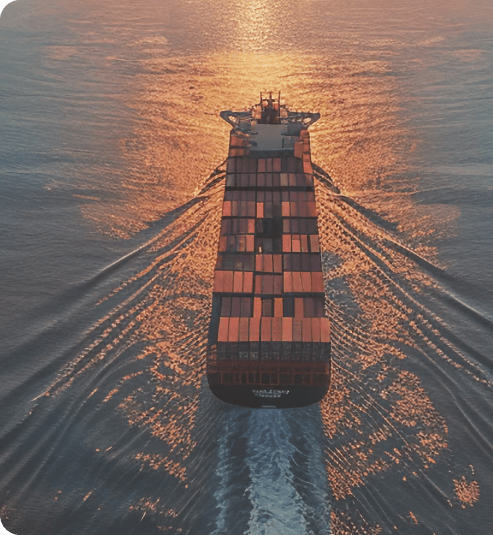
Sea freight
Sea freight with Goods Bulk Supply is a clearly organised process in which every stage is controlled by a personal manager.
How sea freight works with Goods Bulk Supply
Sea freight with us is a clearly organised process in which every stage is controlled by a personal manager.
- Step 1. You leave a request. The manager contacts you for a consultation, agreeing the route and signing the contract.
- Step 2. After preparing the documents, we arrange the delivery of an empty container to the warehouse, factory or other place of dispatch specified in the contract.
- Step 3. The loaded container is delivered by land transport to the nearest sea port. The transport of cargo by sea begins right here - with careful preparation for customs clearance.
- Step 4. After passing customs control, the container is loaded onto the vessel and dispatched via the selected shipping line. International sea freight is carried out in all directions: China, the USA, Europe, Southeast Asia, the UAE and other regions.
- Step 5. At the port of destination, we arrange in-port forwarding and the onward transport of the cargo by road or rail to the customs terminal or the recipient's warehouse.
- Step 6. After clearing customs, the cargo is delivered to its final destination. The entire process is tracked in real time - you always know where your goods are.
Sea cargo from China and Asia
Sea cargo is the optimal solution for a business that regularly imports goods in large or medium batches. Sea freight is the most economical type of international delivery: the cost of freight per kilogram or cubic metre is several times lower than with air delivery. That is why most entrepreneurs working with suppliers from China, India, Vietnam or Turkey choose the sea as their main logistics channel. Goods Bulk Supply offers two formats: FCL - a full container for large batches, and LCL - consolidated sea freight of cargo for those for whom there is no sense in paying for a whole container. In both cases we take on the full cycle - from picking up the goods at the supplier's warehouse to delivery to your warehouse in Ukraine.
Types of transport: what we offer
Goods Bulk Supply specialises in two main formats of sea container transport that allow the needs of a business of any scale to be met.
- FCL (Full Container Load) - full container load. The optimal choice for large batches of goods. Your cargo occupies the entire container - regardless of whether it is filled completely or partially. There is no need to wait for consolidation: dispatch happens faster, and the risks of damage are minimal.
- LCL (Less than Container Load) - consolidated cargo. The ideal solution for small and medium batches. Container transport of cargo in the LCL format allows your batch to be combined with the cargo of other senders in a single container. You pay only for the volume actually occupied - with no overpayment for "emptiness".
- Oversized and bulk cargo. For industrial equipment, machinery or raw materials that do not fit standard container parameters, we arrange special solutions involving the chartering of vessels of increased load capacity.
- Consolidated shipments. Sea freight with consolidation is an effective option for entrepreneurs who regularly send small batches from different points to a single recipient.
The cost of sea freight with Goods Bulk Supply
Sea freight of cargo does not have a single fixed rate - the cost is calculated individually for each client, taking into account several key factors.
- Route and distance. The longer the path between the port of departure and the port of destination, the higher the base freight. The availability of a direct route or the need for transit also significantly affect the final price.
- Type and characteristics of the cargo. Dangerous cargo, temperature-controlled goods or goods of increased value require additional safety measures and documentation, which is reflected in the cost. International sea freight with special storage conditions is priced separately.
- Volume and shipping format. FCL shipments of large batches are usually more cost-effective per unit of volume, while container transport by sea in the LCL format allows significant savings on small batches.
- Customs clearance and regulatory requirements. Each country has its own rules, which may provide for additional fees or documents. Delays in clearance mean additional storage costs, so we take on the preparation of documents ourselves.
- Seasonality and market conditions. In peak periods, demand for cargo tonnage grows, which leads to higher freight rates. Our long-term contracts with leading shipping lines allow us to minimise this risk for our clients.
- Weather conditions and route safety. Passing through high-risk zones increases the cost of insurance and freight. We assess all risks in advance and offer the optimal route.
Advantages of FCL cargo transport
Sea freight within Ukraine and abroad in the FCL format is the choice of a business that values speed, safety and predictability.
- Faster delivery. FCL does not require consolidation and additional sorting at transit warehouses. The container goes from sender to recipient without unnecessary stops - your goods arrive faster.
- Maximum cargo safety. The goods remain in a sealed container from the moment of loading to arrival. The number of checks and transshipments is minimal, which significantly reduces the risk of damage or loss.
- A minimum of documents. Sea container transport in the FCL format simplifies logistics: a single waybill is issued for the entire container, without the need to coordinate documents with other consignors.
- Route flexibility. FCL shipments have a wider choice of ports of departure and destination, as well as more options for schedules and shipping lines.
- Cost-effectiveness for large volumes. If a batch of goods occupies more than half the container, FCL becomes more profitable than LCL - the cost of freight per unit of volume is significantly lower.
Requirements for sea container transport
The organisation of international sea freight is not only a matter of logistics but also strict compliance with international and local regulatory requirements.
- Documentation. A full package of documents is required for each shipment: the Bill of Lading, packing list, invoice, certificates of conformity (if necessary), permits for the transport of dangerous or special cargo. Sea freight without correctly prepared documents may be delayed or blocked at customs.
- Packaging requirements. The cargo must be packaged in accordance with sea transport standards: it must withstand prolonged storage in conditions of high humidity, vibration and temperature fluctuations. Special fastenings and crating are used for heavy or non-standard items.
- Marking. Each cargo unit must bear clear marking: the name of the cargo, weight, dimensions, the details of the sender and recipient, as well as warning signs - especially for dangerous or fragile goods.
- Customs requirements of the destination country. Sea freight to different countries involves different clearance rules, prohibited categories of goods and specific document requirements. Our specialists check all the regulations for the chosen destination in advance.
- Insurance. We strongly recommend insuring every shipment. The transport of cargo by sea over long distances always involves certain risks - an insurance policy guarantees compensation for losses in the event of unforeseen circumstances.
